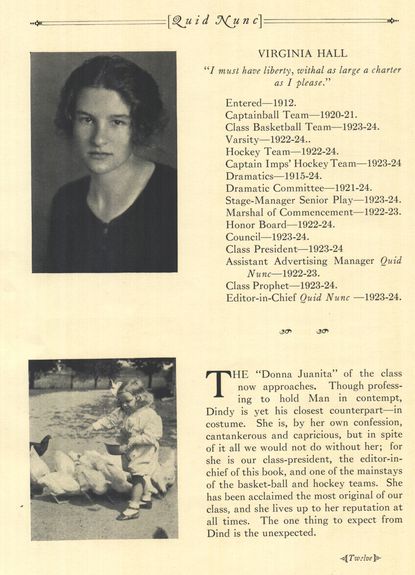
Roland Park County School Yearbook, 1924. Baltimore Sun

Birds-eye View of the Heart of Baltimore, 1912. Library of Congress
Virginia Hall was born to Edwin and Barbara Hall, Baltimorian socialites, on April 6, 1906. Highly educated, she learned French, Italian, Russian, Spanish and German.
Roland Park County School Yearbook, 1924. Baltimore Sun
“She has been acclaimed the most original of our class, and she lives up to her reputation at all times. The one thing to expect from Dind is the unexpected.”
-Roland Park County School Yearbook, 1924
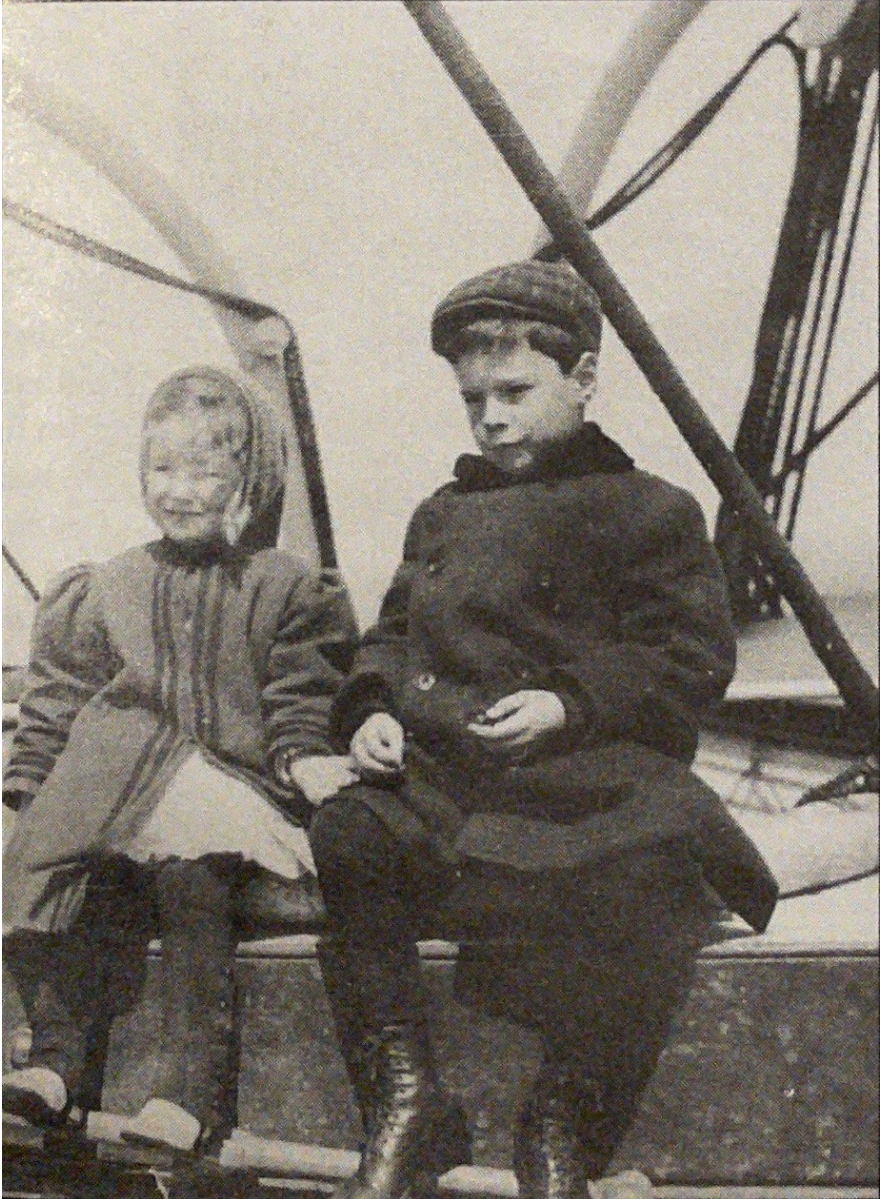
Virginia and her brother John, c. 1920. Judith L. Pearson
Hall aspired to become a Foreign Service diplomat and began working at the Polish embassy in 1931. After transferring to Turkey, Hall lost her leg in a hunting accident on December 8, 1933. Her prosthetic leg, christened “Cuthbert,” was a barrier against her professional advancement despite high test scores. President Roosevelt, appalled by the discrimination, attempted to intervene on her behalf by writing to the Secretary of State. She resigned from her clerical post in 1939.
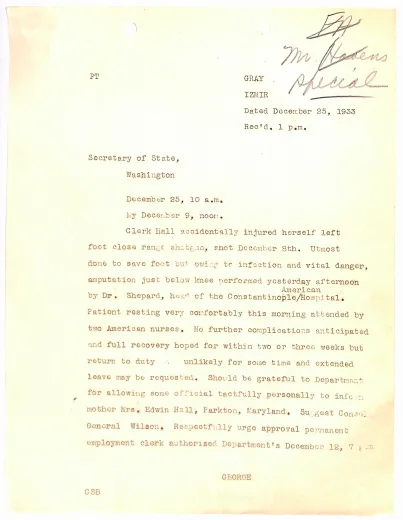
Letter describing Hall's accident, 1933. National Archives
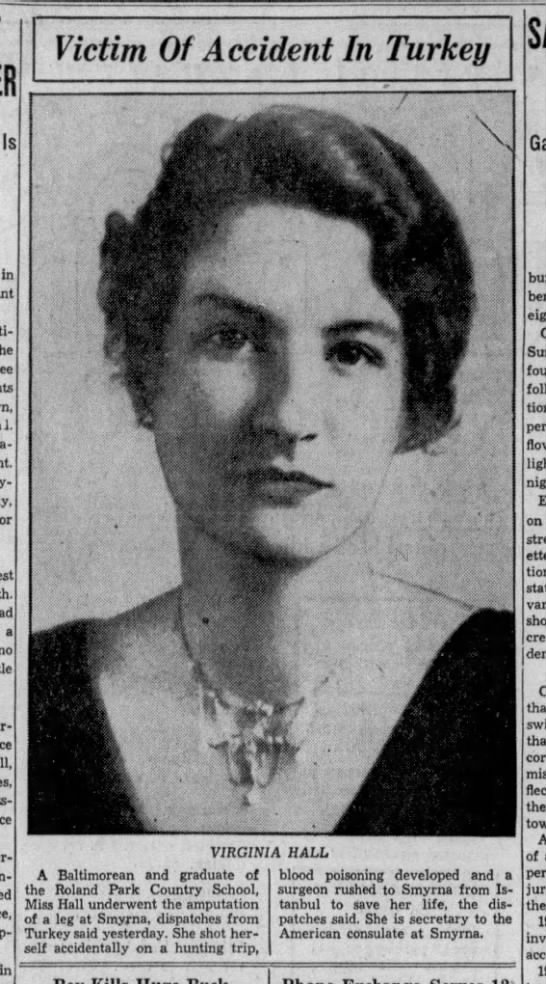
Baltimore Sun, January 9, 1934
"her physical disability barred her entry into the career service."
- J.K Huddle in efficiency report, 1937
"Why, Oh, Why do the regulations governing the entrance into the career service prescribe that amputation of any portion of a limb, except fingers or toes, diqualify an applicant? . . . It seems to me that a regulation of this kind is a great mistake because it might exclude a first class applicant who had an artificial hand or an artificial leg and was perfectly capable of performing all Diplomatic Corps duties . . . I have known many people with wooden legs who dance just as well as many diplomats who have natural legs."
- President Franklin D. Roosevelt to Secretary of State, Cordell Hull regarding Virginia's advancement in the State Department, February 9, 1938
(Mitchell 52)
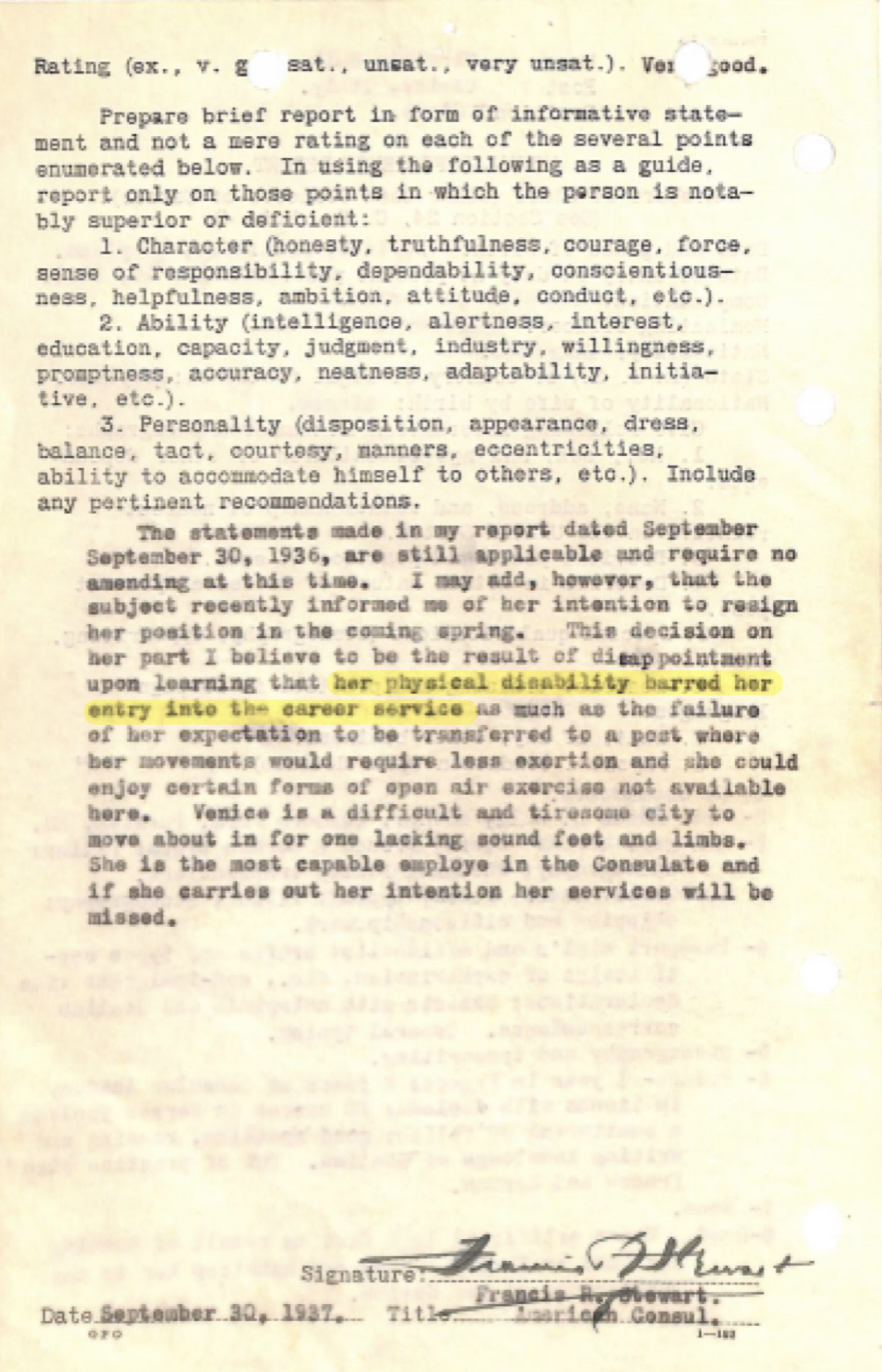
Efficiency report, 1937. National Archives