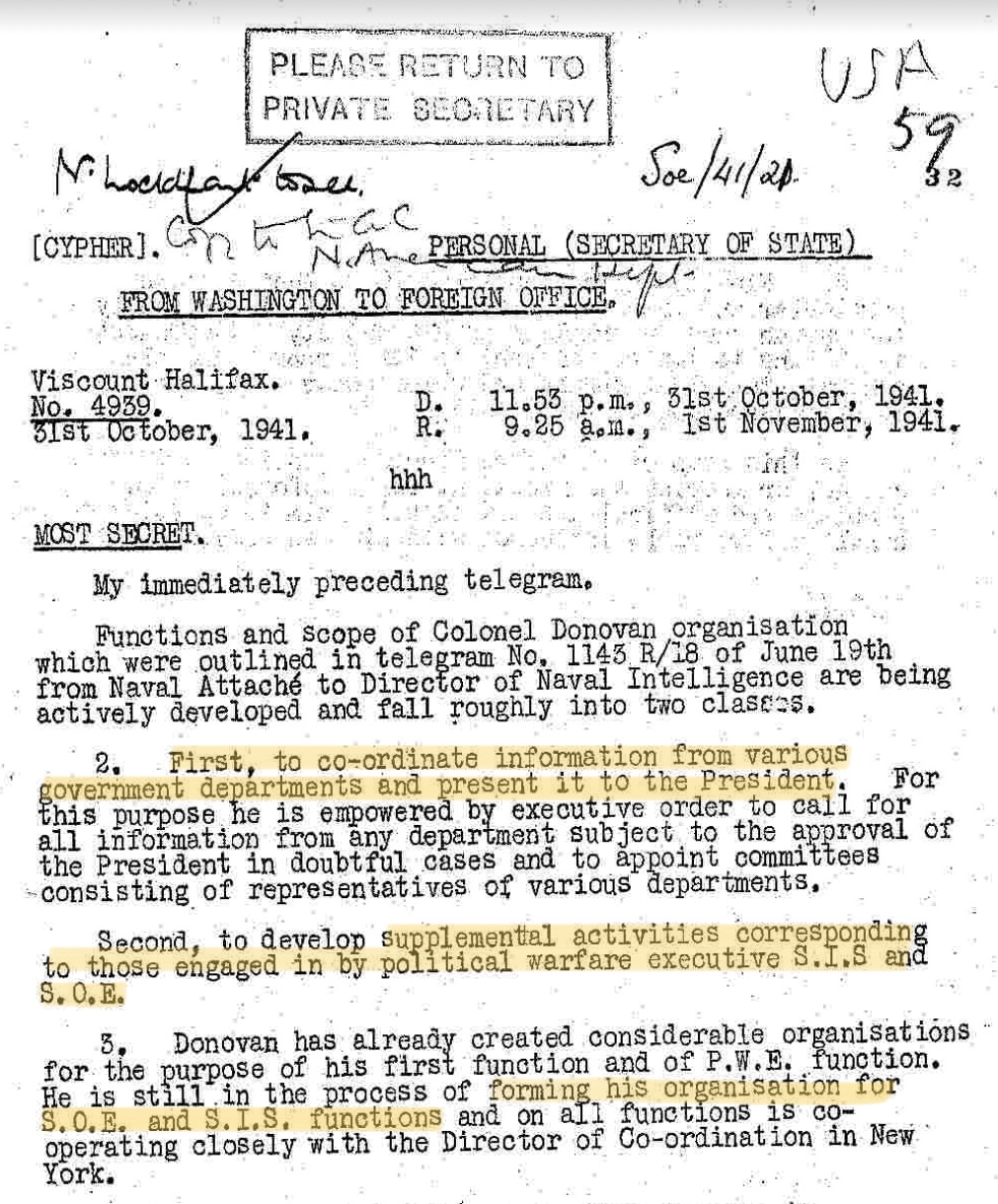
Telegram about functions and scope of Colonel Donovan's activities. October 31, 1941. British National Archives
Two Bristol Blenheim Mark IVs of No. 139 Squadron RAF based at Plivot, in flight over northern France, c. 1940. Imperial War Museums
America's first intelligence agency, the Office of Strategic Services (OSS) was created on June 13, 1942; it was the SOE’s American counterpart.
Telegram about functions and scope of Colonel Donovan's activities. October 31, 1941. British National Archives
"There was no precedent and no time for perfect organization.The job had to be done and all individuals involved, however successful they may have been in previous pursuits, were novices at this. It was very challenging."
- Caroline Copeland Bland, OSS officer, c. 1993
"The mission of the OSS is to plan and operate special services, (including secret intelligence, research and analysis, and morale and physical subversion) to lower the enemy's will and capacity to resist, carried on in sup- port of military operations and in furtherance of the war effort."
- Special Operations Field Manual - Strategic Services, c. 1944
The SOE blocked Hall’s return to France, deeming it too risky now that the Nazis were searching for her. Yet her dedication showed through her refusal to stay in London while her colleagues risked their lives in France. She turned to the OSS and trained as a radio operator, a position where there was a scarcity, and lobbied for her recruitment.
"When I came out here I thought that I would be able to help F Section people but I don't and I can't . . . I am simply living pleasantly and wasting time. After all, my neck is my own . . . willing to get a crick in it because there is a war going on."
-Virginia Hall, 1942 (Purnell 330)
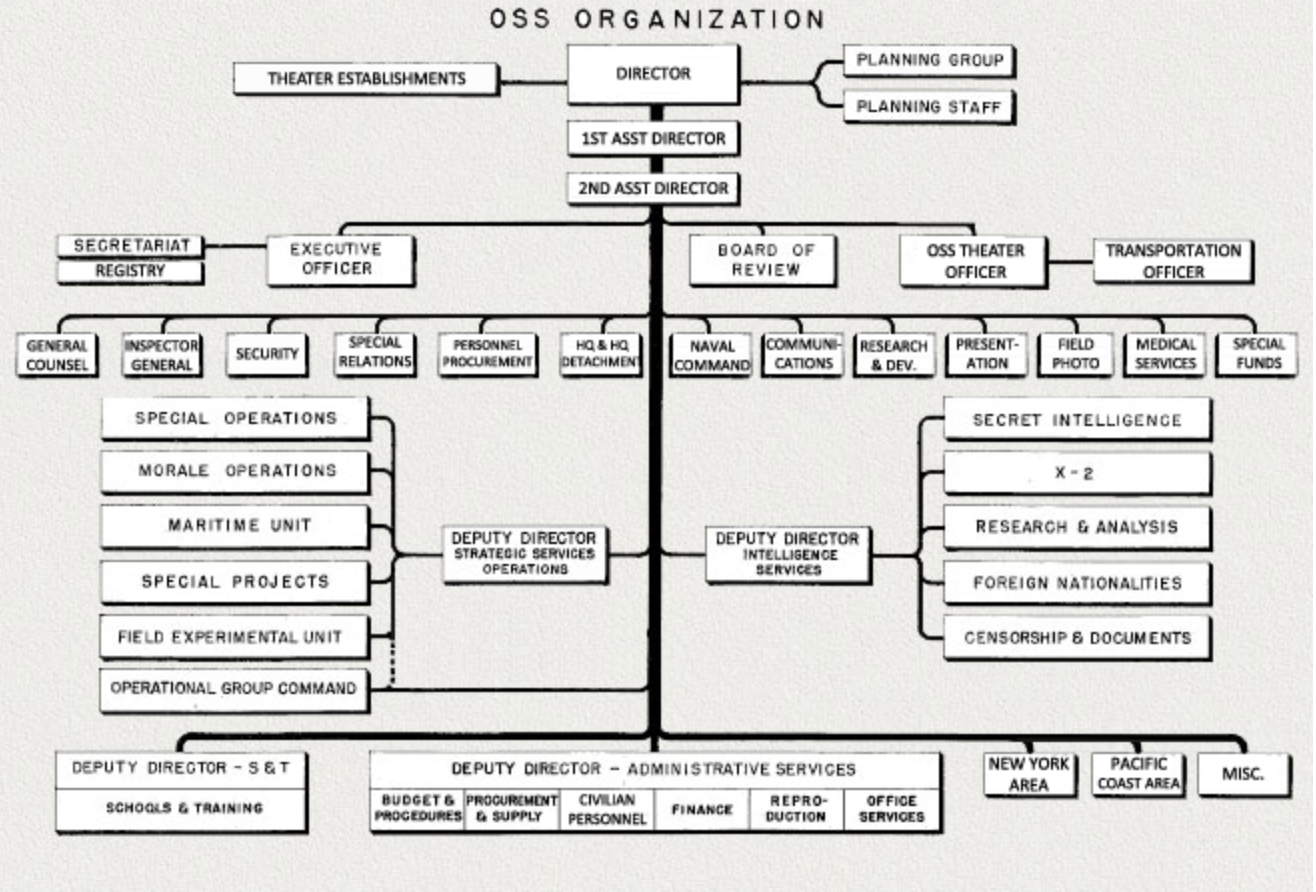
OSS Operational Group Command Booklet, c. 1945. United States Army Special Operations Command
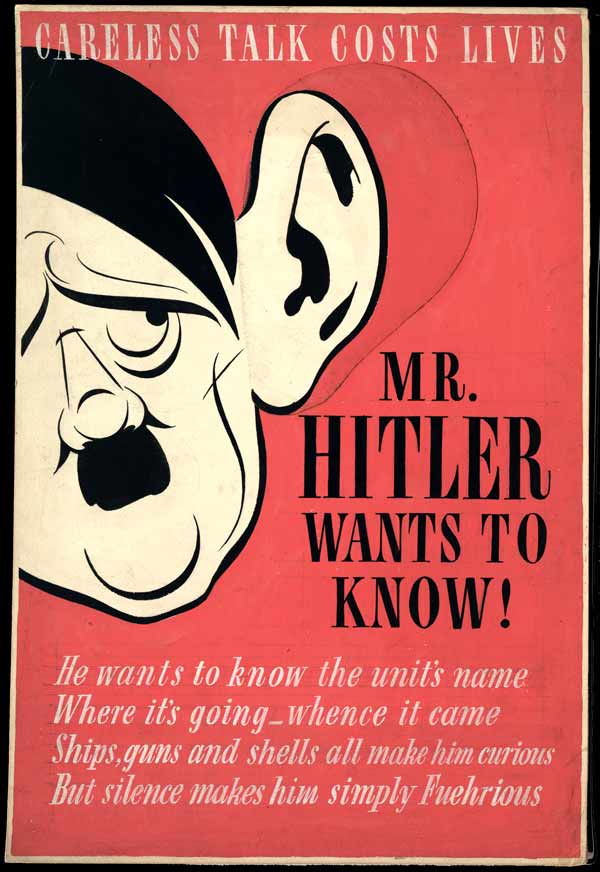
Hitler with an ear stretched out to hear careless talk, c. 1940. British National Archives
"The Boche is good at patiently following trails, and sooner or later he will unravel the whole skein if he has a chance. We do not want to give him even half a chance by sending in anyone as remarkable as yourself."
-Maurice Buckmaster, 1942 (Purnell 331)
“Communications between those in the field and the home offices were maintained for the most part by radio telegraph. With each agent or mission there was dispatched a highly trained radio operator who had with him anywhere from one to six or eight separate radio sets complete with special apparatus for recharging batteries. One of the chief concerns of any organizer or agent was the protection of his operator."
- Origin and Development of Resistance in France, Office of Strategic Services, c. 1944
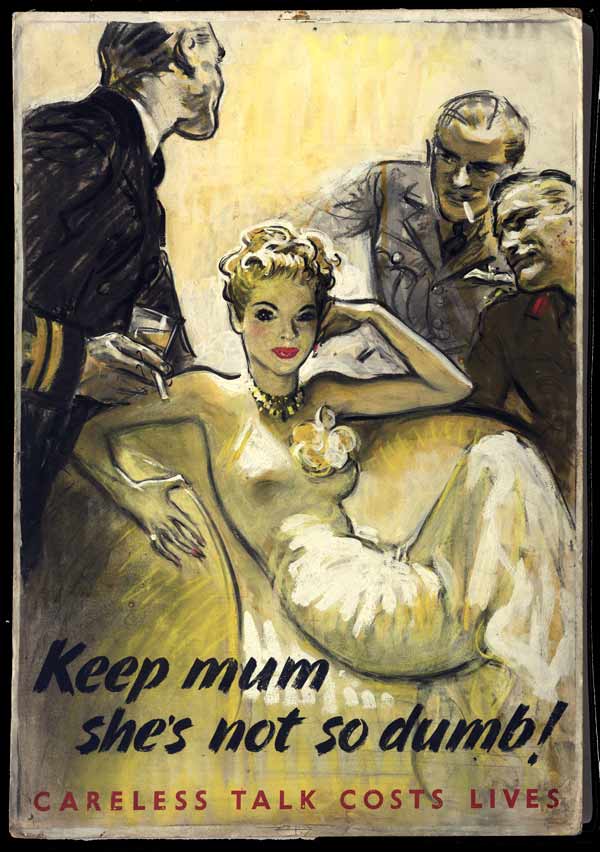
Keep mum – she's not so dumb, c. 1942. British National Archives
Hall returned to France, on March 21, 1944, disguised as an elderly lady to assuage concerns of recognition.
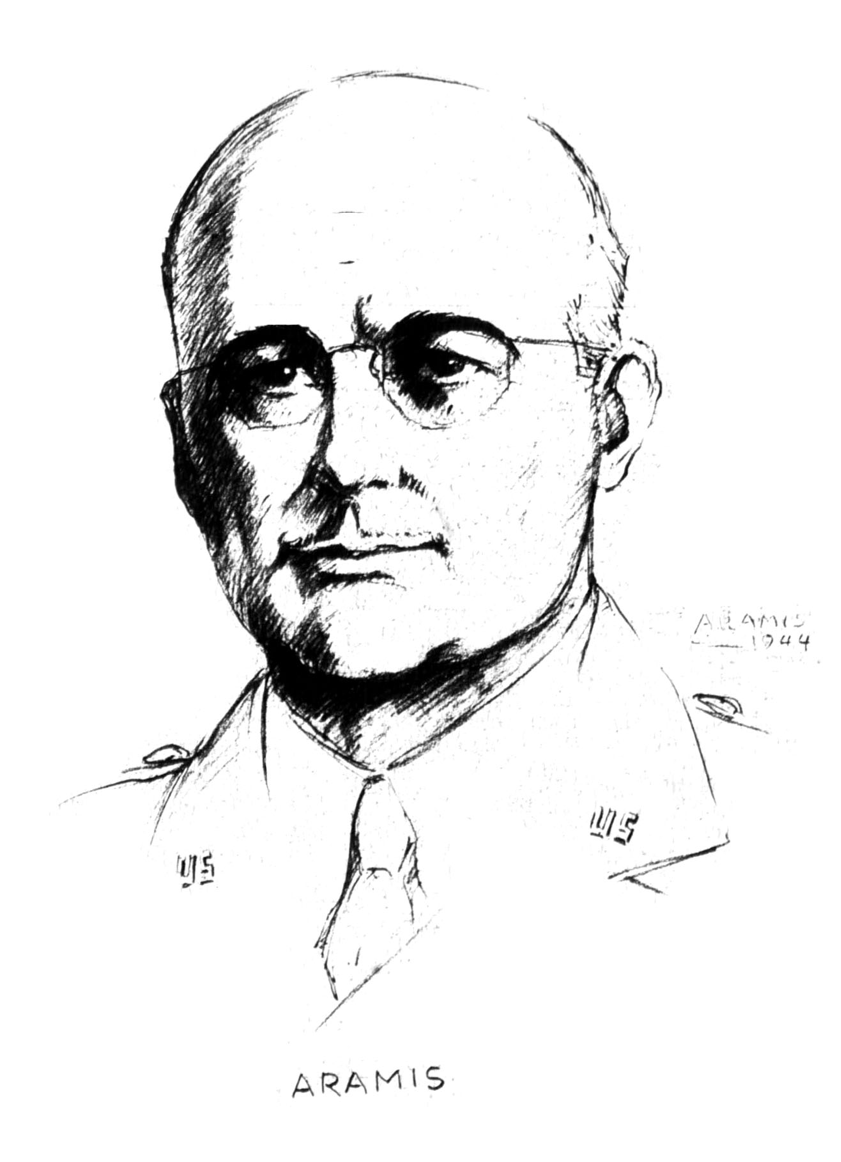
A self-portrait sketched by Aramis, a colleague, (Henry Laussucq) in the field, 1944. Judith L. Pearson
“I was completely surprised at her appearance. She looked like an old lady with dark gray hair, dressed completely in black, with a black pearl choker which relieved to a degree the severity of her appearance. However, she still looked like a queen.”
-Lt. Rene Julian Defourneaux, 1996 (McIntosh 124)