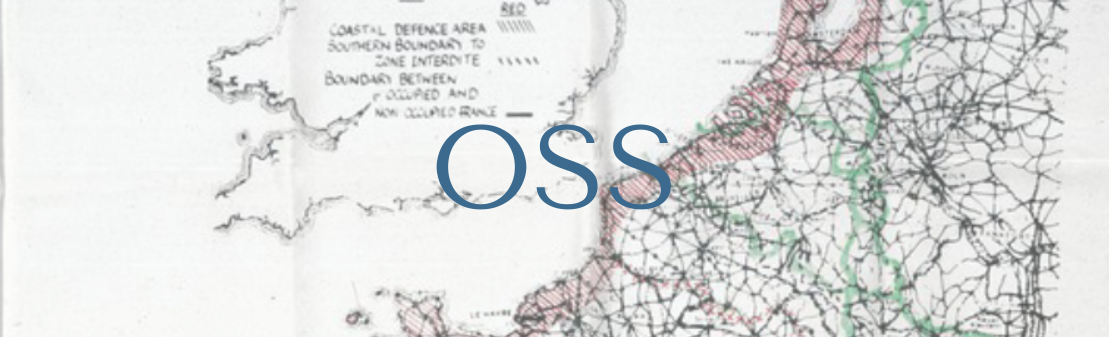
Square silk map depicting France and the low countries, c. 1942. Imperial War Museums
By 1944, F Section’s priorities shifted and preparations were made for an imminent invasion. In response, Hall gathered information on troops, organized guerrilla groups, and facilitated sabotage operations.
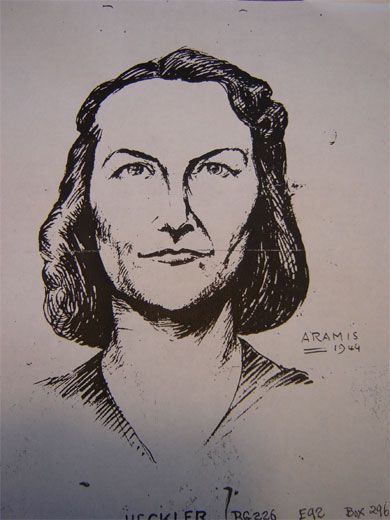
Sketch of Virginia by Aramis (Henry Laussuq), 1944. Judith L. Pearson
The Allies constantly had a need for fresh information. Although radio operating was the riskiest SOE/OSS role, Hall put her life on the line to feed the need for communication through transmissions to London.
“I spent my time looking for fields for receptions, bicycling up and down mountains, checking drop zones, visiting various contacts, doing my wireless transmissions and then spending the nights out for the most part in vain, for deliveries.”
- Virginia Hall, 1944 (Purnell 418)
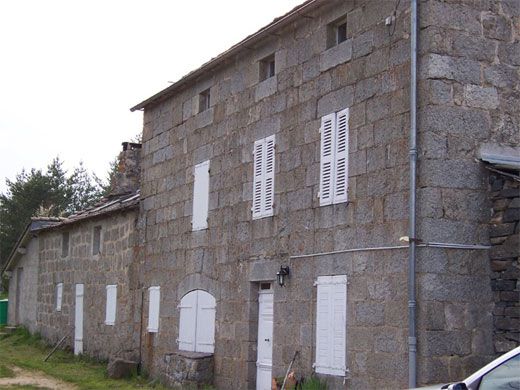
"Virginia broadcast radio transmissions in July, 1944 from this barn in Le Chambon sur Lignon in the Haute-Loire region." c. 2002. Judith L. Pearson
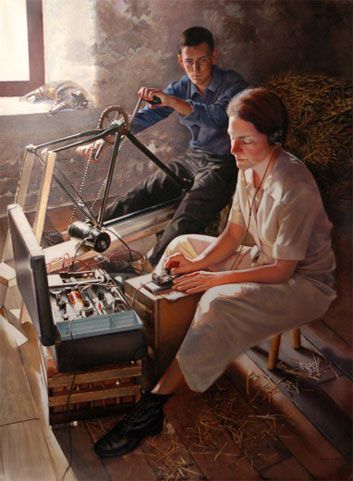
Painting of Virginia Hall transmitting messages from France. Jeff Bass
“With mountains not far off. Mountains with trees which deadens that sort of thing. So difficulties there could be natural adversaries and such like. But on the other hand, after a short while, I was detected and therefore had to put up with their [German] sounds as well. Various kinds of jamming. I'm afraid for England to receive me, the jamming damage might have sounded even worse, for it was jammed on the spot and they had bigger instruments to listen into us.”
- Yvonne Cormeau, oral interview, 1984
"Whenever possible an operator would have a number of sets located in different houses at a good cycling distance from each other. By moving from house to house after a certain number of transmissions, the operator ran less risk of being picked up by German radio DF squads."
- Origin and Development of Resistance in France, Office of Strategic Services, c. 1944
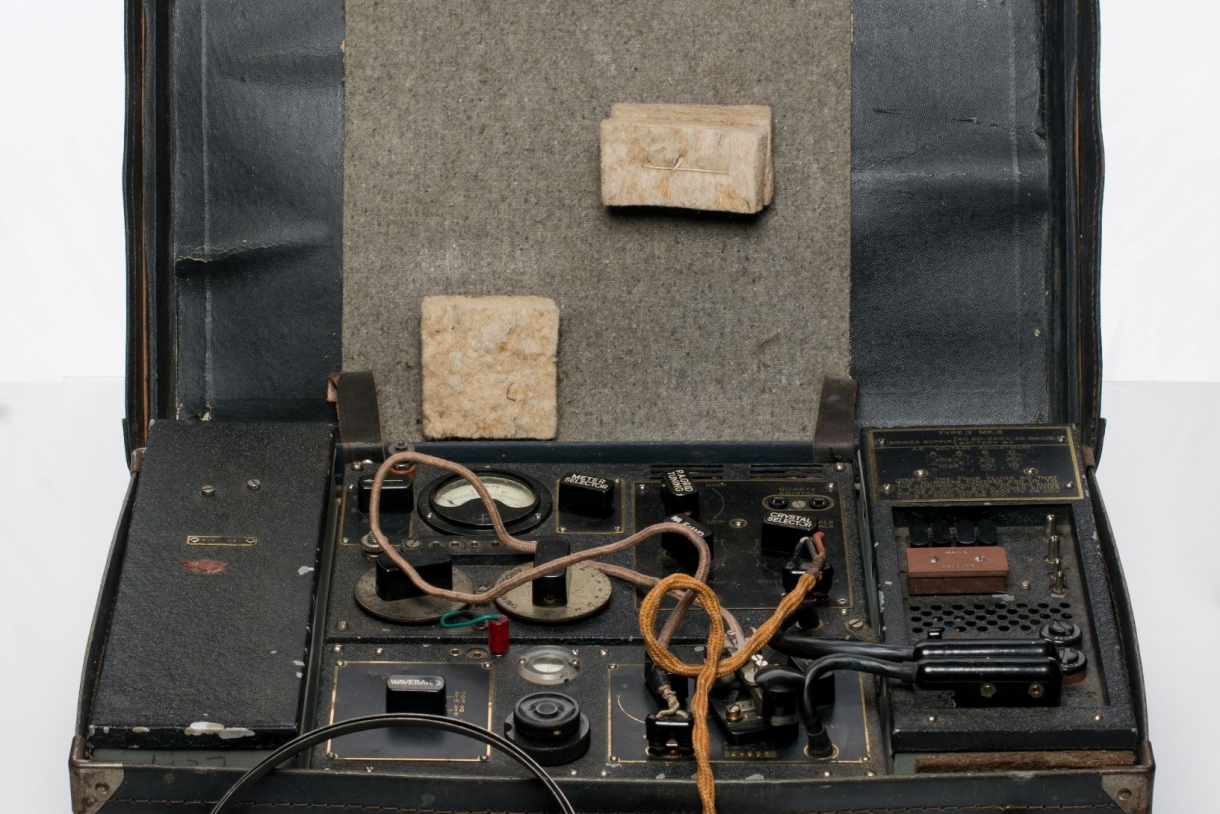
Type 111 MKII Radio (Virginia Hall), 1944. International Spy Museum